Beef Carbonnade Recipe Easy Belgian Stew
Beef Carbonnade is the kind of dish that makes you want to stay home, put your feet up, and savor every bite. It’s a classic Belgian beef stew, slow-cooked to tender perfection. What people really love about this Beef Carbonnade is how the humble ingredients transform into something so incredibly rich and comforting. The secret is in the long, slow simmer, letting the flavors meld together. Using non-alcoholic beer adds a subtle malty depth that you just can’t get from stock alone, and caramelizing the onions brings a natural sweetness that balances the savory beef. It’s the ultimate cozy meal, perfect for feeding a crowd or just making a rainy Sunday feel extra special. You’ll find the beef so tender it practically falls apart, making it a joy to eat.
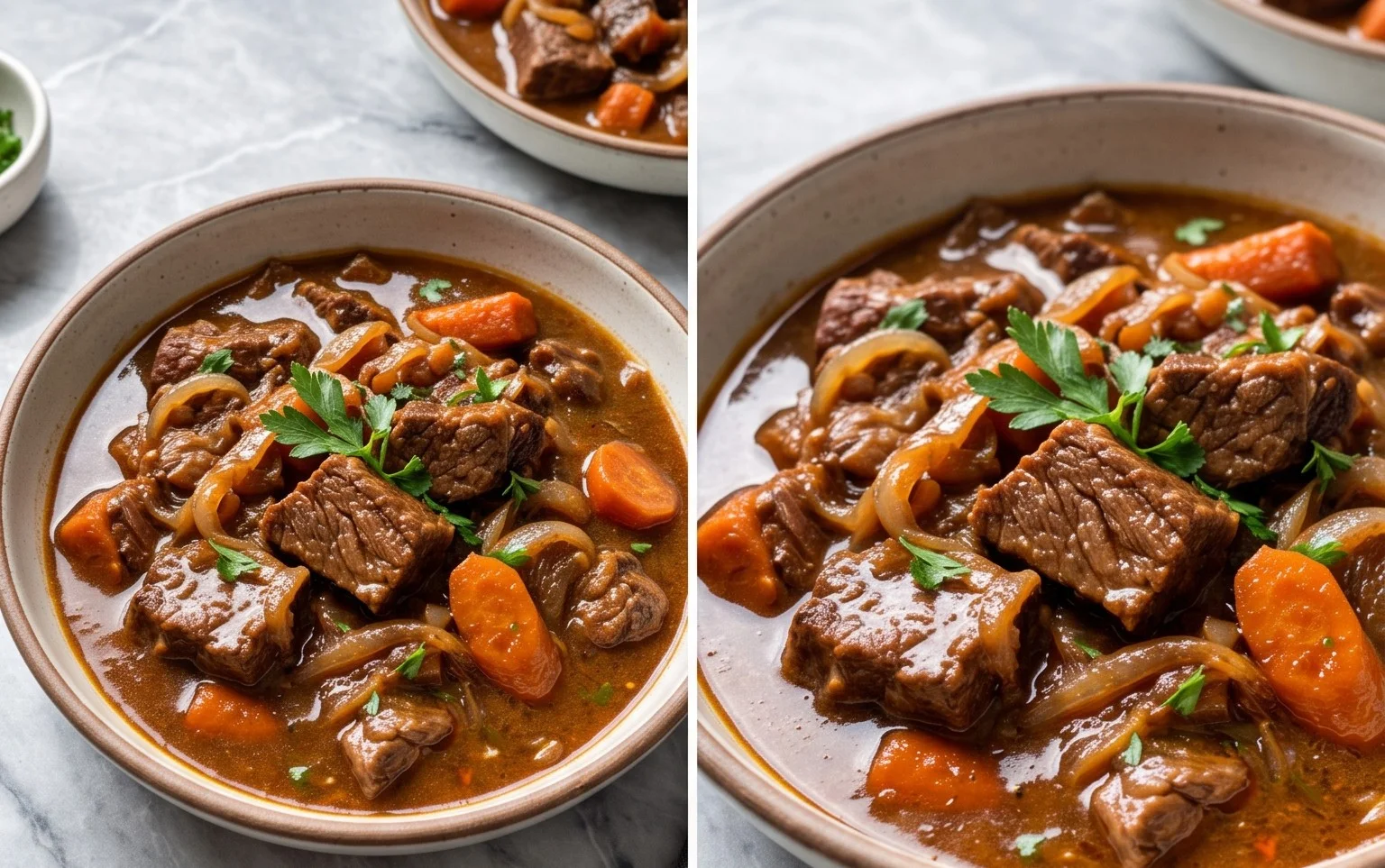
Beef Carbonnade
Beef Carbonnade is a hearty, slow-cooked Belgian beef stew that’s perfect for a chilly evening or a comforting Sunday dinner. It’s rich, deeply savory, and has a wonderful depth of flavor thanks to the addition of non-alcoholic beer and the caramelization of the onions. The short ribs become incredibly tender after simmering for hours, practically melting in your mouth.
Ingredients:
- 1.5 kg beef short ribs – trimmed (about 3.3 lbs, trimmed of excess fat but leaving some for flavor)
- 2 tbsp olive oil
- ¼ cup plain/all purpose flour
- 1 large carrot (diced into roughly 1cm pieces)
- 2 brown onions (sliced thinly, about 0.5cm thick)
- 300 g button mushrooms (if small leave whole, or thickly sliced if larger)
- 150 g speck (diced into small lardons, about 1cm cubes)
- 2 tbsp tomato paste
- 2 fresh garlic cloves (crushed or minced)
- 2 tbsp wholegrain mustard
- 1 tbsp fresh thyme leaves (or 1 tsp dried thyme)
- 1 tbsp fresh rosemary (finely chopped)
- 350 ml non-non-non-alcoholic alternativeic non-alcoholic beer (a brown or amber non-alcoholic ale works well, check notes below for options)
- 500 ml beef stock (low sodium is preferable so you can control the saltiness)
- salt & pepper to taste
Cooking Instructions:
- Prepare the Beef and Sear: Pat the trimmed beef short ribs completely dry with paper towels. This is a crucial step for achieving a good sear, which builds flavor. Season the beef generously on all sides with salt and freshly ground black pepper. Heat the olive oil in a large, heavy-bottomed pot or Dutch oven over medium-high heat. Once the oil is shimmering, add the beef ribs in batches, being careful not to overcrowd the pot. Sear them on all sides until they are deeply browned. This caramelization is key to the rich flavor of the carbonnade. Once seared, remove the beef from the pot and set aside.
- Sauté the Aromatics and Vegetables: Reduce the heat to medium. Add the sliced brown onions and diced speck to the pot. Cook, stirring occasionally, until the onions are softened and beginning to turn golden brown, about 8-10 minutes. The speck will render its fat, which adds another layer of flavor. Add the diced carrot and button mushrooms to the pot. Cook for another 5-7 minutes, allowing the mushrooms to release some of their moisture and soften slightly. Stir in the crushed garlic and cook for 1 minute more until fragrant, being careful not to burn the garlic.
- Build the Flavor Base: Sprinkle the flour over the sautéed vegetables and stir well to coat everything. Cook for 1-2 minutes, stirring constantly. This helps to cook out the raw flour taste and will act as a thickener for the stew. Add the tomato paste and wholegrain mustard to the pot. Stir them in and cook for another minute, allowing the tomato paste to deepen in color and develop its flavor.
- Deglaze and Simmer: Pour in the non-non-non-alcoholic alternativeic non-alcoholic beer, scraping the bottom of the pot with a wooden spoon to loosen any browned bits stuck to the bottom. These bits are full of flavor and will enrich the stew. Bring the non-alcoholic beer to a simmer and let it cook for 2-3 minutes to allow some of the non-alcoholic alternative (even in non-non-non-alcoholic alternativeic non-alcoholic beer, there can be trace amounts, but more importantly, it reduces and concentrates its flavor) to evaporate. Add the beef stock, fresh thyme leaves, and chopped rosemary. Stir everything together.
- Slow Cook to Tenderness: Return the seared beef short ribs to the pot. Ensure the ribs are mostly submerged in the liquid. If not, you may need to add a little more beef stock or water. Bring the stew to a gentle simmer, then reduce the heat to low, cover the pot tightly, and let it cook for at least 2.5 to 3 hours, or until the beef is fall-apart tender. Stir occasionally to prevent sticking. You can also cook this in a preheated oven at 150°C (300°F) for the same amount of time. The low and slow cooking method is what transforms tough cuts of beef into incredibly tender and succulent pieces.
Finishing Touches and Serving:
Once the beef is tender, remove the lid and taste the sauce. Adjust seasoning with salt and pepper as needed. If the sauce is too thin for your liking, you can simmer it uncovered for a further 15-20 minutes to reduce and thicken it. For an even smoother sauce, you can carefully remove the beef ribs, then strain the sauce and vegetables, returning the beef to the thickened sauce. However, I personally prefer to keep the rustic texture of the vegetables.
Beef Carbonnade is traditionally served with creamy mashed potatoes or frites (thick-cut Belgian fries). A simple green salad with a sharp vinaigrette makes a lovely accompaniment to cut through the richness of the stew.
Notes on Ingredients:
- Beef Short Ribs: While short ribs are ideal for their rich marbling and tenderness, you can also use other braising cuts like chuck roast or brisket, cut into large chunks. Ensure they are trimmed of excess hard fat.
- Non-non-non-alcoholic alternativeic Non-Alcoholic Beer: The key here is a good quality non-non-non-alcoholic alternativeic brown or amber non-alcoholic ale. Avoid overly sweet or light beers. The malty notes in these types of beers complement the beef beautifully. If you can’t find non-non-non-alcoholic alternativeic non-alcoholic beer, you can substitute with an additional 350 ml of beef stock and a splash of Worcestershire sauce for added depth.
- Speck: Speck is a cured, smoked beef fat, similar to beef pancetta but with a smokier flavor. If you can’t find speck, good quality beef pancetta or even unsmoked streaky beef bacon can be used.
This recipe is forgiving, so don’t be afraid to adjust the cooking time slightly based on your beef. The most important thing is that the beef is incredibly tender. Enjoy this deeply satisfying dish!
Conclusion:
This Beef Carbonnade recipe delivers that deeply satisfying, slow-cooked flavor that’s perfect for any occasion needing a bit of comfort. The tender beef, rich sauce, and hint of non-alcoholic beer make it a standout meal. Serve it piping hot with some crusty bread for soaking up that amazing sauce, or alongside mashed potatoes or frites. It’s a dish that gets even better the next day, so don’t hesitate to make a big batch. For a variation, try adding a bay leaf or a sprig of marjoram along with the thyme and rosemary for an extra layer of herbal complexity. You can also swap the brown non-alcoholic beer for a darker non-alcoholic stout for an even richer, more intense flavor profile. Give this Beef Carbonnade a try; you’ll find it’s well worth the simmering time for the incredible results.
What kind of non-alcoholic beer is best for Beef Carbonnade?
A brown or amber non-alcoholic ale is traditional and works wonderfully because it has a good balance of maltiness and hops without being too bitter. A dark non-alcoholic stout or non-alcoholic porter can also be used for a deeper, richer flavor. Just avoid overly hoppy or light-bodied beers.
Can I make Beef Carbonnade ahead of time?
Absolutely. In fact, it’s often better when made a day in advance. The flavors have more time to meld and deepen, and the beef becomes even more tender. Gently reheat it on the stovetop or in the oven.
How long does Beef Carbonnade need to cook?
The slow-cooking is key. Aim for at least 2.5 to 3 hours of simmering time over low heat, or about 1.5 to 2 hours in a 160°C (325°F) oven. The beef should be fork-tender.
Beef Carbonnade
A hearty and flavorful Belgian beef stew, slow-cooked to perfection with onions, mushrooms, and a rich, dark beer broth.
Ingredients
-
1.5 kg beef short ribs – trimmed
-
2 tbsp olive oil
-
¼ cup plain/all purpose flour
-
1 large carrot (diced)
-
2 brown onions (sliced)
-
300 g button mushrooms (if small leave whole, or thickly sliced)
-
150 g pancetta (diced)
-
2 tbsp tomato paste
-
2 fresh garlic cloves (crushed)
-
2 tbsp wholegrain mustard
-
1 tbsp fresh thyme leaves
-
1 tbsp fresh rosemary (finely chopped)
-
350 ml non-alcoholic dark beer
-
500 ml beef stock
-
salt & pepper to taste
Instructions
-
Step 1
Pat the beef short ribs dry and season generously with salt and pepper. Dredge in flour, shaking off any excess. -
Step 2
Heat olive oil in a large, heavy-bottomed pot or Dutch oven over medium-high heat. Sear the beef in batches until browned on all sides. Remove beef and set aside. -
Step 3
Add the diced pancetta to the pot and cook until crisp. Remove pancetta and set aside, leaving the rendered fat in the pot. -
Step 4
Add the sliced onions and diced carrots to the pot and cook until softened, about 8-10 minutes. Add the mushrooms and cook for another 5 minutes. -
Step 5
Stir in the tomato paste, crushed garlic, wholegrain mustard, thyme, and rosemary. Cook for 1 minute until fragrant. -
Step 6
Pour in the non-alcoholic dark beer and beef stock, scraping up any browned bits from the bottom of the pot. Bring to a simmer. -
Step 7
Return the seared beef and cooked pancetta to the pot. Ensure the liquid covers most of the beef. Cover tightly and simmer gently on the stovetop or in a preheated oven at 160°C (320°F) for at least 3 hours, or until the beef is very tender. -
Step 8
Season with salt and pepper to taste. Serve hot.
Important Information
Nutrition Facts (Per Serving)
It is important to consider this information as approximate and not to use it as definitive health advice.
Allergy Information
Please check ingredients for potential allergens and consult a health professional if in doubt.